

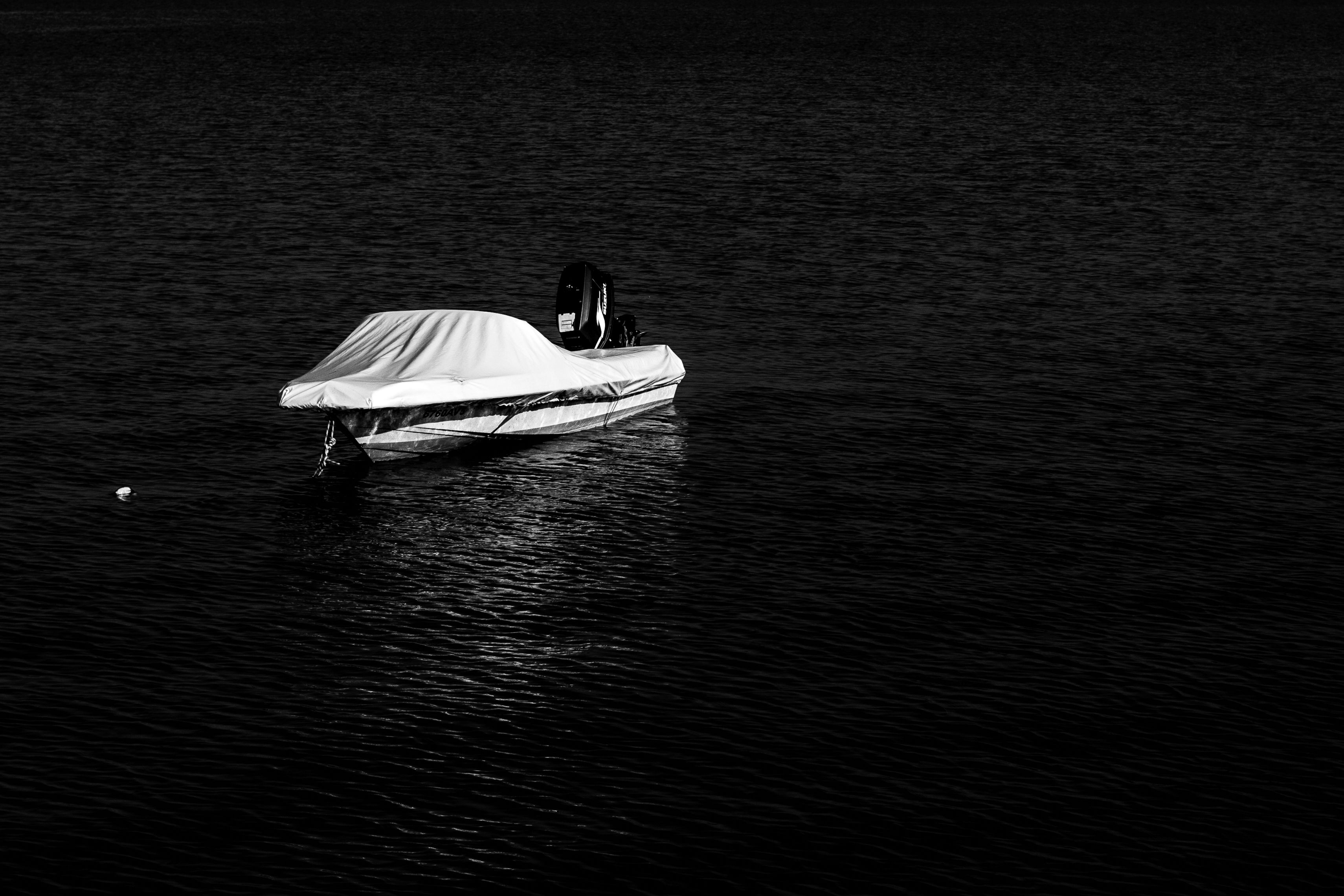
A boat cover does a lot more than keep rain off the seats.
A good cover protects the boat from sun, dirt, leaves, bird droppings and general exposure when it is sitting at home or on a trailer. It can help protect upholstery and interior fittings, while also making the boat easier to keep clean between trips.
The tricky part is choosing the right one. Boat covers come in different sizes, shapes, materials and designs, and a cover that looks suitable on paper may not fit your particular boat properly.
So, how do you choose the right boat cover?
Start with the boat itself. The length, width, shape and fittings all matter. You also need to consider whether the boat will be stored at home, kept outdoors, or covered while being towed.
What type of boat cover do you need?
The first thing to consider is the shape and layout of your boat.
A cover designed for a V-hull runabout may not be suitable for a centre console, bowrider or boat with a permanent T-top. The cover needs to be able to sit over the parts of the boat it is designed to protect without putting excessive tension on the fabric or leaving large areas exposed.
Common cover styles include:
Runabout covers, designed for common open or semi-open runabout layouts
Bowrider covers, which accommodate the different shape and seating arrangement at the front of the boat
Centre console covers, designed to accommodate a console and associated fittings
Side console covers, where the driving position is offset from the centre
Pilot or cruiser covers, designed for boats with a higher cabin or windscreen profile
T-top covers, designed around boats with a permanent T-top structure
Universal or semi-custom covers, which cover a range of boat shapes and sizes
The important point is not to choose a cover based on length alone. The shape of the boat and the cover design need to be compatible.
Measure your boat before choosing a size
Boat cover sizes are often described using a nominal boat length, such as 14–16 ft or 17–20 ft. That does not necessarily mean you should simply measure the hull from the bow to the transom and choose the corresponding number.
Different manufacturers use different sizing systems.
Some cover guides ask you to measure the boat's overall fabric length and width, including the height of features the cover needs to pass over. Others provide separate straight-line hull measurements and measurements over obstructions.
This is why the manufacturer's measurement guide should always take priority over a generic sizing rule.
What you generally need to measure
At a minimum, take note of:
Overall length
Widest point or beam
Height and position of major obstructions
Windscreen or console
Bimini or T-top
Bow rails
Stern bait board or other fittings
Any other equipment that the cover needs to fit over
For some covers, the measurement needs to follow the shape of the boat over these obstructions rather than simply running in a straight line.
A cover that is technically long enough but doesn't have enough width or clearance over the boat can still be the wrong size.
How to measure a boat for a cover
If you are buying a cover based on overall fabric dimensions, the measurement process is slightly different from simply measuring the hull.
A common approach is to measure the overall fabric length from around the bow area to the stern, following the profile over the highest parts of the boat. You then measure the overall fabric width across the boat at its widest point, again accounting for the profile the cover needs to follow.
For example, a windscreen or folded Bimini may sit higher than the gunwales. If the cover needs to pass over it, that needs to be reflected in the measurement.
Some manufacturers recommend measuring a certain distance below the bow and stern to account for where the cover hem will sit. The exact method varies by manufacturer, so use the instructions supplied for the cover you are considering.
If your measurements sit close to the boundary between two available sizes, don't guess. Check the manufacturer's dimensions and the maximum beam specified for each size.
Don't forget the beam
Boat owners often focus on length because it is the number used most prominently when boats are advertised.
Width matters just as much for a cover.
A cover needs enough width to come down the sides of the boat and provide appropriate coverage without being stretched excessively. Two boats with a similar length can have very different beam measurements and therefore require different covers.
Measure the widest part of the boat rather than assuming the beam from a model name or advertised length.
What about the windscreen, Bimini or other fittings?
This is one of the easiest things to overlook.
A boat may be advertised as 4.5 metres long, for example, but the cover still needs to fit around the actual configuration of the boat.
Consider anything the cover has to pass over, including:
Windscreens
Consoles
Folded Bimini tops
T-tops
Bow rails
Ski poles
Rocket launchers
Stern bait boards
Other permanent fittings
Whether these need to be included in the measurement depends on the cover design.
Some covers are specifically shaped for particular boat configurations, while others are designed to fit more generally. If you have a permanent structure that isn't covered by the manufacturer's sizing guide, a different cover style may be more appropriate.
What material should a boat cover be made from?
The fabric is important, particularly if the boat spends a lot of time outdoors.
Look for a material designed for marine or outdoor use with suitable resistance to UV exposure, water and general wear.
A heavier fabric isn't automatically better for every application. A cover that is difficult to handle may be frustrating to put on and remove, particularly if you are doing it regularly.
For Australian conditions, UV resistance is particularly worth considering. Sun exposure can gradually degrade fabrics and contribute to fading and deterioration of the boat underneath.
Water resistance is also important, but a cover's ability to deal with moisture isn't just about keeping rain out. Condensation can become a problem if moisture becomes trapped underneath the cover.
Check the manufacturer's information about the fabric, coating and intended use rather than choosing based purely on the denier number.
Do you need a waterproof boat cover?
Not necessarily in every situation.
A cover should provide appropriate protection from rain and weather, but waterproofing is only one part of a good boat-cover design.
Breathability matters too, particularly when a boat is covered for extended periods. Trapped moisture can contribute to condensation, mould and mildew.
This is one reason it is worth looking at the manufacturer's intended use rather than assuming that the most heavily waterproofed fabric is automatically the best option.
Are all boat covers suitable for towing?
No.
If you intend to tow the boat while it is covered, make sure the specific cover is designed for trailer use.
A cover sitting on a stationary boat does not experience the same forces as one travelling at highway speeds. Wind can get underneath the fabric, and movement can cause rubbing and wear.
A trailerable cover should be properly secured using the supplied straps or tie-down system. For longer highway trips, additional securing may be appropriate depending on the manufacturer's instructions.
Never assume that a generic storage cover is suitable for towing simply because it fits the boat.
Should the cover be tight?
It should be secure, but tighter isn't automatically better.
A cover that is too small can put unnecessary strain on seams, fittings and fabric. It may also fail to provide adequate coverage.
A cover that is excessively loose can flap in the wind, collect water and move around against the boat.
The goal is a cover that fits the intended boat and can be properly secured without excessive tension.
Support poles or other support systems can also be useful where recommended by the cover manufacturer, particularly to help prevent rainwater from pooling on the cover.
What if your boat has a Bimini?
This depends on the cover.
Some general-purpose covers are designed to be used with a Bimini folded down. In that situation, the Bimini may need to be folded and positioned on the gunwales before taking your measurements.
Other covers are designed specifically for boats with a permanent Bimini or higher structure.
Don't assume that a standard runabout cover will work simply because the boat's length falls within the advertised size range.
Should you buy a cover slightly bigger than your boat?
There isn't a universal rule that says bigger is always better.
The correct approach is to compare your measurements with the manufacturer's actual cover dimensions and recommended boat range.
A little extra room may be intentional, particularly where the cover is designed to extend below the gunwales. But choosing a substantially oversized cover can result in excessive material, poor tension and more movement in the wind.
If you're between sizes, look at the manufacturer's measurements and maximum beam rather than relying on the nominal length printed on the packaging.
What should you consider if the boat is stored outside?
Outdoor storage puts considerably more demand on a cover than occasional indoor or undercover storage.
If the boat is outside for long periods, pay particular attention to:
UV resistance
Water resistance
Breathability
Fabric strength
Seam construction
Tie-down points
Fit and coverage
Ease of removal and cleaning
It is also worth thinking about the conditions where the boat is stored. A cover used under a sheltered carport has a very different job from one left outside in full Australian sun and weather.
What makes a good boat cover?
There isn't one cover that is right for every boat.
The best choice is the one that matches the boat's shape, dimensions and intended use.
Before buying, check:
1. Boat style
Make sure the cover is designed for your type of boat and console or cabin configuration.
2. Measurements
Measure the boat according to the manufacturer's instructions rather than relying solely on the boat's advertised length.
3. Beam
Check the maximum beam specified for the cover.
4. Obstructions
Consider windscreens, Biminis, T-tops, rails and other fittings.
5. Fabric
Look for suitable UV, water and wear resistance for where the boat will be stored.
6. Intended use
Confirm whether the cover is intended for storage, trailering or both.
7. Securing system
Check how the cover is fitted and whether it includes straps, tie-downs or other securing hardware.
8. Manufacturer's sizing chart
This should be the final reference before choosing the size.
How to measure your boat for a cover
Before ordering, grab a flexible tape measure and write down your measurements.
For a cover that uses overall fabric dimensions, measure the length and width according to the manufacturer's fitting guide, including the relevant profile over windscreens, folded Biminis or other obstructions.
For a cover that uses straight-line hull measurements, follow that system instead.
The distinction matters. A measurement taken one way cannot necessarily be compared directly with a cover dimension measured another way.
If you're unsure, take photographs of the boat from the side and above, record the measurements and compare them with the manufacturer's sizing chart before ordering.
Choosing the right boat cover comes down to fit
A boat cover isn't something I'd choose based on the advertised boat length alone.
The boat's shape, beam, fittings, storage conditions and intended use all affect which cover will work properly. Getting the measurements right is one of the most important parts of the process, particularly when buying online.
If you're replacing an old cover, don't automatically order the same nominal size either. Use the opportunity to measure the boat again and compare those measurements with the current cover's sizing information.
A few minutes with a tape measure is a lot cheaper than discovering that your new cover doesn't fit once it arrives.
